Nigeria Becomes Africa’s Leading Buyer of Smart City Surveillance Technology Amid Growing Privacy Concerns
The project, contracted to Chinese firms including ZTE Corporation and Hikvision, was designed to support the Nigeria Police Force
The project, contracted to Chinese firms including ZTE Corporation and Hikvision, was designed to support the Nigeria Police Force with nationwide surveillance and video conferencing infrastructure, particularly in major cities such as Lagos and Abuja.
he project, contracted to Chinese firms including ZTE Corporation and Hikvision, was designed to support the Nigeria Police Force with nationwide surveillance and video conferencing infrastructure, particularly in major cities such as Lagos and Abuja.
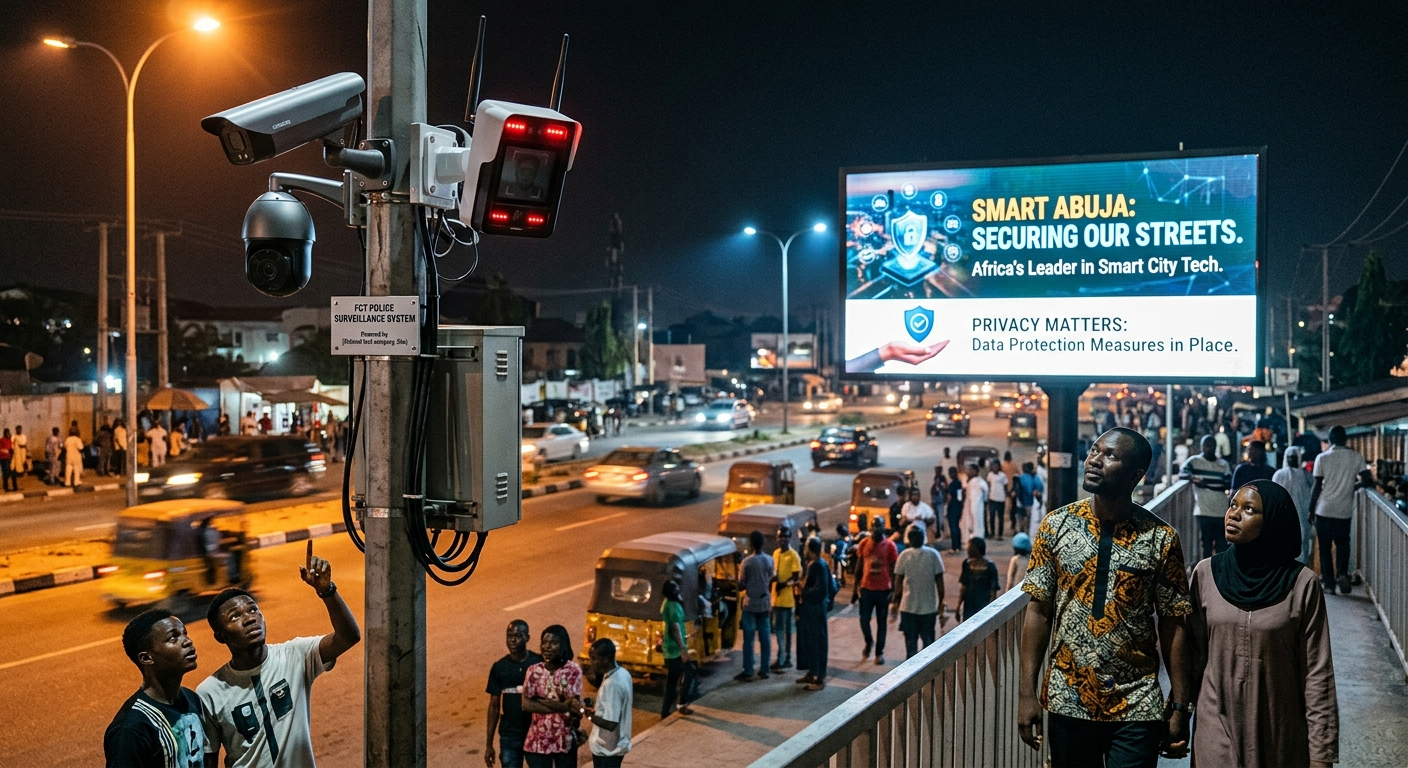
Nigeria has become the leading purchaser of smart city surveillance technology in Africa, with public spending exceeding $470 million on advanced digital monitoring systems, including AI-powered facial recognition and automatic number plate recognition (ANPR).
At the center of this investment is the National Public Security Communication System, a $470 million project jointly financed by the Nigerian government and a loan from the China Eximbank. The federal government contributed 15% of the funding, while the remaining 85% (approximately $399 million) was secured through external borrowing. The project, contracted to Chinese firms including ZTE Corporation and Hikvision, was designed to support the Nigeria Police Force with nationwide surveillance and video conferencing infrastructure, particularly in major cities such as Lagos and Abuja.
However, the project has faced significant implementation challenges over the years. Initially announced in 2010, reports indicate that by 2013, several installed systems had gone offline or fallen into disrepair. There have also been allegations of mismanagement and possible misappropriation of funds, raising concerns about transparency and accountability in the execution of the project.
Beyond federal efforts, state governments have also made substantial investments in surveillance technology. In Lagos State, a large-scale “safe city” initiative launched in 2016 led to the deployment of approximately 13,000 CCTV cameras. This was later expanded in 2019 with an additional 10,000 high-definition cameras equipped with facial recognition capabilities. Similarly, Oyo State implemented its own surveillance program in partnership with global technology providers such as Huawei and Hikvision, focusing on modern high-definition monitoring systems.
While these investments are justified by authorities as critical tools for enhancing public safety and reducing crime, they have sparked growing criticism from privacy advocates and researchers. Concerns center on the lack of specific legislation regulating large-scale surveillance programs in Nigeria, as well as the absence of clear human rights impact assessments prior to deployment.
The debate continues over whether these technologies strike an appropriate balance between security and the protection of citizens’ privacy rights, as Nigeria deepens its adoption of AI-driven surveillance systems across the country.
SOURCE : Tech Africa News