
Tech in Disaster Response: How can technology aid in natural disaster prediction and response?
In 2026, disaster management has shifted from reactive to proactive.Technology is now the "nervous system" of emergency response,
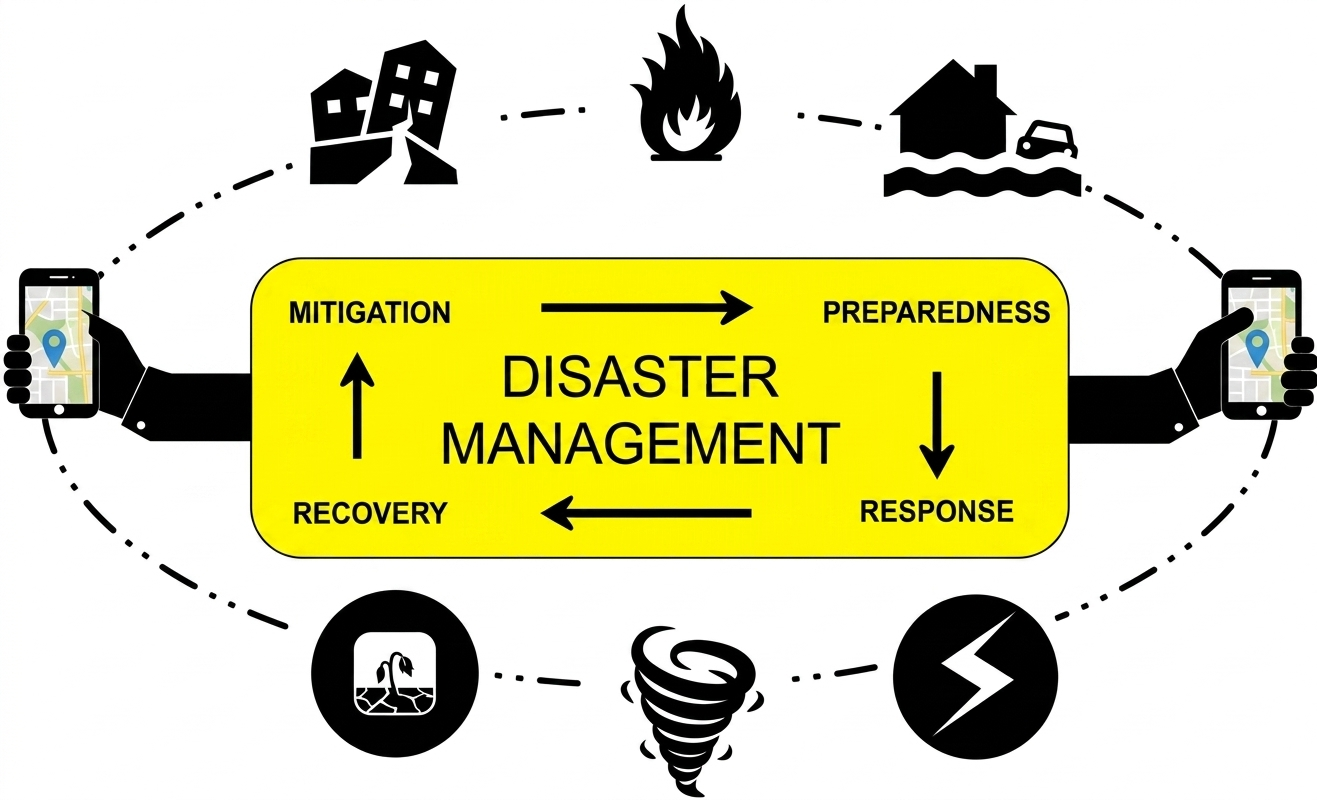
In 2026, disaster management has shifted from reactive to proactive.
Technology is now the "nervous system" of emergency response, providing real-time data to help rescue teams move faster and more accurately.
Here is how technology is aiding in prediction and response:
1. Artificial Intelligence (AI) for Hyper-Local Prediction
AI has moved beyond general weather forecasts to "hyper-local" modeling.
- Flood Forecasting: Systems like Google Flood Hub use machine learning to predict riverine floods up to seven days in advance, even in areas with limited historical data.
- Early Signal Detection: AI tools monitor social media and news in real-time to detect "disaster signals" (like sudden spikes in posts about shaking or smoke) often before official sensors trigger.
2. The Internet of Things (IoT) & Sensor Networks
Dense networks of low-power sensors act as the "eyes and ears" on the ground.
- Seismic Sensors: IoT devices placed in fault zones detect the very first vibrations of an earthquake, triggering automated systems to shut off gas lines and stop high-speed trains seconds before the heavy shaking starts.
- Smart Buoys: Satellite-connected buoys monitor water pressure and sea levels to provide early tsunami warnings to coastal communities.
3. Robotics & Drones for Search and Rescue
When environments are too dangerous for humans, robots take over.
- Search Drones: Drones equipped with thermal cameras (LWIR) can detect human body heat through thick smoke or debris from over 100 meters away.
- Snake & Vine Robots: Flexible robots like the MIT SPROUT can "grow" or crawl through tiny gaps in collapsed buildings to find survivors and relay 3D maps to rescuers.
- Humanoid Robots: In 2026, humanoid robots are increasingly used to enter radiation zones or unstable structures to perform tasks like turning valves or moving heavy rubble.
4. Satellite Imagery & Geospatial Mapping
Earth observation satellites provide a "bird's-eye view" that is critical for large-scale coordination.
- Damage Assessment: AI-powered analysis of satellite imagery can produce "damage maps" within hours of a disaster, identifying which bridges are out or which neighborhoods are cut off by landslides.
- SAR (Synthetic Aperture Radar): This specialized satellite tech can "see" through clouds and smoke, allowing rescuers to monitor floods or fires even in total darkness or bad weather.
5. Blockchain for Transparent Aid
Distributing help after a disaster is often slow and prone to fraud.
- Digital Cash Transfers: Agencies like UNICEF now use blockchain to send "digital cash" directly to survivors' mobile phones.
- Transparency: Because blockchain is a permanent record, donors can see exactly where their money goes, ensuring aid reaches the intended people without being lost to middlemen.
Sources:
- WMO (World Meteorological Organization): They lead the global effort in using AI and "Digital Twins" to predict weather and water disasters.
- IFRC (World Disasters Report 2026): The Red Cross's main report, which focuses on how to get trustworthy information to people during a crisis.